
Weeds are the great enemy. They get in the way, they are ugly, and they don’t contribute to our lives. We spend resources and time removing them and poison our world with chemicals to avoid seeing this chaotic part of nature. “This is how we’ve always done it; we must get rid of the weeds,” we think, but perhaps it’s time to ask ourselves some critical questions: “Is it really as bad as we think?”
What exactly are weeds, what’s wrong with them, and – most importantly – is this war worth fighting?
In the landscaping world, there are no two words we love to discuss more than weeds and sustainability. We like to throw these words around, and we think we all agree on what they mean. If we stopped and asked each other, “What does it really mean to you?”, we would quickly discover that the details in our definitions are far from the same.
Before we can even begin to discuss this topic, we must try as best as possible to come to a somewhat clear and common definition of these two terms, but this proves to be easier said than done.
“Weeds are flowers too, once you get to know them.”
– Eeyore
In biology, there are no weeds. It is a human-made classification that creates more trouble than solutions. According to Ben Wilson, it is impossible to come to an objective definition of weeds; instead, our view is based on what we consider ugly and chaotic. We humans love symmetry; it brings peace to the soul and protects us from the unexpected and uncontrollable. This has been our approach for as long as we have lived. We can even find this mindset in the Bible, where everything chaotic, asymmetrical, and wild is compared to evil (Wilson, p. 78). We hate weeds because they challenge our comfortable view of the world. Weeds have become the devil in our everyday lives.
This does not mean that we have always seen the same plant as a weed over the past 2000 years. Tastes and opinions change over time. In fact, many of the most common weeds have played an important role in our society throughout history. Weeds were easily accessible food and medicine, and it was once unimaginable to live without these plants (Fowler, 2022). So, what happened?
The Industrial Revolution changed the rules forever. With the sudden rapid development experienced by the Western world, we learned to value efficiency. Products and goods were to be produced as quickly and efficiently as possible and in as large quantities as possible. For farmers, this meant going from growing a variety of crops that could feed the household to growing only a few that could be sold. Of course, some specific crops were chosen, namely those that produced the most food.
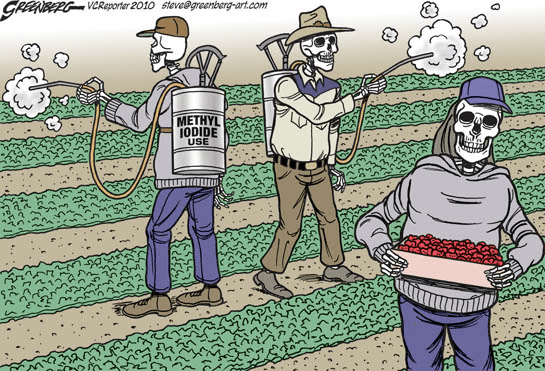
Weeds were in the way of this development, and the most effective solution was to start a chemical war against them. Countless liters of pesticides were dumped and sprayed in fields, and the result is far from positive.
We have not only poisoned nature and the soil but also ourselves. The World Health Organization has raised alarms about finding traces of various chemicals in our food, leading to diseases (WHO, 2022). Studies show a clear link between pesticide exposure and higher rates of cancer, Parkinson’s, and other terrible diseases (NIH, 2011).
In recent years, fortunately, we have started to move in a different direction regarding weed control. Standardization and research of pesticides have removed the most harmful products from the market, and today we are beginning to look at other possible solutions. Unfortunately, many of these solutions are incredibly resource-intensive and not as effective. Whether it is pouring boiling water over the weeds, applying electric currents, or mechanically removing them, these methods require high amounts of money and labor.
It is understandable that in certain situations, we almost have to remove weeds, such as in fields or other economically important areas, but do we need to be as strict when it comes to our parks and gardens, where the worst the weeds do is offend our eyes?
We live in a time marked by high uncertainty, climate crises, rising prices, and inflation. We cannot be content to continue doing things as we always have; we must adapt to survive these new situations. Perhaps it is time to change our view of something we cannot even define? Maybe weeds can even be an ally?
One thing is certain, as Ben Wilson writes, we will never be able to eradicate weeds; they are too tough for us (Wilson, p. 95). To live sustainably, the war against weeds is completely contrary to this mindset.
If weeds are an invasive species that cause harm to nearby areas, they should of course be removed, but apart from this, what is the worst that weeds can do?
Weeds mean healing. They are the first to appear after major disasters, taking over dead areas and preparing them for the next plants. We certainly don’t need to love them, but perhaps it’s time to at least learn to tolerate them. It is my personal opinion that we can live with them. We can no longer afford to be so picky about how the world should look. Who knows, maybe in 100 years weeds will be intentionally planted in flowerbeds and even become part of our diet again?
Sources:
National Institutes of Health. (2011). NIH study finds two pesticides associated with Parkinson’s disease.
(https://www.nih.gov/news-events/news-releases/nih-study-finds-two-pesticides-associate
d-parkinsons-disease)
The Guardian. (2022). How I learned to love weeds and why you should too. (https://www.theguardian.com/lifeandstyle/2022/mar/16/how-i-learned-to-love-weeds-an
d-why-you-should-too)
Wilson, B. (2022). Urban Jungle – Wilding the City.
World Health Organisation. (2022). Pesticide residues in food. (https://www.who.int/news-room/fact-sheets/detail/pesticide-residues-in-food)
 Flowers in Cement